Nov 17, 2025
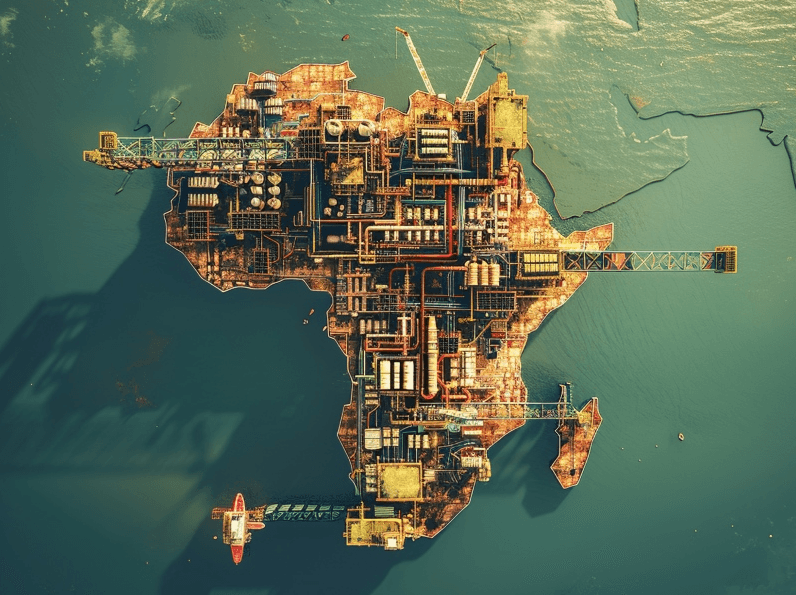
Africa’s Energy Market: Growth and Transformation
Zellow Analysis: Africa's energy landscape is undergoing a dual transformation where traditional hydrocarbon production growth coincides with renewable energy acceleration and critical mineral extraction for global energy transition. Electricity generation is projected to rise from 980 TWh today to almost 1,400 TWh by 2030, with renewables' share increasing from 27% to over 43%. Global upstream capital spending could reach $600 billion in the second half of this decade, yet approximately 600 million people in Sub-Saharan Africa remain without electricity access. Meanwhile, Africa holds strategic reserves of cobalt, lithium, graphite, nickel, and copper, with global demand for these critical minerals projected to rise fourfold by 2040 and six times current supply needed to achieve net-zero targets by 2050. Clean energy investment has surged from $17 billion in 2019 to nearly $40 billion in 2024, with private-sector funding tripling over the same period. For investors evaluating African energy opportunities, policymakers balancing energy access with climate commitments, and mining companies targeting critical mineral supply chains, understanding how Africa's $600 billion hydrocarbon investment, renewable energy expansion, and critical mineral reserves intersect with global energy transition priorities is essential for navigating this complex, high-stakes transformation.
Africa’s Energy Paradox: Growth vs. Energy Access Gap
Africa's energy sector demonstrates a stark paradox: massive production capacity coexists with severe access gaps, creating both a humanitarian crisis and an extraordinary investment opportunity.
Energy Access Statistics Africa: The 600 Million Without Power
Sub-Saharan Africa faces limited access to reliable power, with approximately 600 million people without electricity and over 1 billion lacking clean cooking options. These numbers represent more than statistics. They quantify economic opportunity lost, health compromised by indoor air pollution from traditional cooking, and education limited by inability to study after dark.
The access distribution inequality: North Africa and South Africa, home to less than 20% of Africa's population, attract nearly 45% of energy investments and account for over 65% of installed electricity capacity. This concentration means Sub-Saharan Africa outside South Africa receives disproportionately little energy infrastructure investment relative to population and need.
Progress falling short of targets: New electricity connections have grown steadily since 2000, yet progress remains far below the universal access target for 2030. At current connection rates, universal electricity access in Sub-Saharan Africa won't be achieved until well into the 2040s or 2050s, leaving hundreds of millions in energy poverty for another generation.
Africa Electricity Generation Projections for 2030
Electricity generation is projected to rise from nearly 980 TWh today to almost 1,400 TWh by 2030, representing 43% growth in just six years. This expansion reflects both economic development, driving increased consumption and electrification efforts connecting previously unserved populations.
The renewable energy acceleration: The share of renewables is increasing from over 27% to more than 43% during the same period. This near-doubling of renewable percentage demonstrates that Africa's electricity generation growth is being powered primarily by clean energy rather than fossil fuel expansion.
What 1,400 TWh means operationally: For context, Germany consumed approximately 550 TWh in 2024. Africa's projected 1,400 TWh by 2030 represents roughly 2.5 times Germany's total consumption serving a population 16 times larger, illustrating that even with substantial growth, Africa's per-capita electricity consumption will remain far below developed markets.
Africa’s $600 Billion Hydrocarbon Investment Wave
Africa's energy sector is undergoing significant growth driven by both traditional hydrocarbons and renewable technologies. Global upstream capital spending could reach $600 billion in the second half of this decade, primarily through greenfield investments.
Oil Production Growth Africa: West Africa Leadership
Africa is projected to supply about 8% of global oil in 2024 and 2025, with production rising gradually from 6.5 million barrels per day to nearly 7 million barrels per day by the end of 2025. While 8% global market share may seem modest, Africa's production growth occurs as mature fields in North America and the Middle East face declining output.
West Africa drives growth: West Africa produces around 3.7 million barrels per day, more than half of Africa's total output, supported by Angola maintaining production levels and Nigeria recovering from years of underinvestment and security challenges affecting output.
North Africa's contributions: North Africa contributes approximately 3 million barrels per day, led by Algeria's stable production and Libya's output, though Libya remains vulnerable to political instability that can shut production for months during civil conflict periods.
Offshore versus onshore dynamics: Onshore production accounts for slightly more than half of Africa's output, with West Africa dominated by offshore supply and North Africa primarily onshore. Offshore producers like Angola and Nigeria are investing to offset natural declines in mature fields, keeping output steady at around 3 million barrels per day through continuous investment in new wells and enhanced recovery techniques.
Natural Gas: Africa's LNG Hub Emergence
The continent is emerging as a strategic hub for liquefied natural gas alongside North America and the Middle East, while North Africa remains central to Europe's gas diversification strategy. Production growth is concentrated in Sub-Saharan and West Africa, complemented by deepwater exploration successes in Côte d'Ivoire and Namibia.
Why LNG matters strategically: As Europe seeks to reduce Russian gas dependence following geopolitical tensions, African LNG offers geographic proximity, a diverse supplier base, and substantial unexplored reserves. Mozambique, Nigeria, and Algeria are positioned to capture significant market share in European gas imports through 2030.
Why Energy Investors Remain Cautious in Africa
Public exploration and production companies still allocate less than 50% of their budgets to African projects, reflecting cautious optimism amid security, regulatory, and financing challenges. This underinvestment relative to resource potential suggests that improving political stability, regulatory predictability, and security infrastructure could unlock substantially more capital deployment.
Clean Energy Investment Surge: From $17 Billion to $40 Billion
Clean energy investment, previously below $30 billion per year, has surged since 2021, with private sector funding tripling from $17 billion in 2019 to nearly $40 billion in 2024. This tripling demonstrates that capital is recognising the commercial viability of African renewable energy projects beyond development-focused concessional finance.
Africa’s Solar and Wind Projects: Inside the 500 GW Renewable Pipeline
Solar photovoltaic and onshore wind projects are expanding rapidly across North and South Africa, with over 500 GW of capacity in the concept phase. This pipeline, even if only 20-30% reaches financial close and construction, represents a transformational capacity addition that would fundamentally alter Africa's electricity mix.
Decentralised solutions scaling: Decentralised solutions, such as solar home systems and mini-grids, are critical for improving access in rural Sub-Saharan Africa, where extending national grids remains economically unviable. These off-grid and mini-grid solutions have attracted venture capital and private equity providing around 40% of early-stage financing since 2015, particularly for projects averaging $7 million per deal.
Africa’s Nuclear and Energy Storage Expansion Strategy
Countries including South Africa, Egypt, Nigeria, Ghana, Kenya, and Uganda are also investing in nuclear power and energy storage to diversify their power mix and provide baseload capacity complementing variable renewable generation.
Why nuclear for Africa: Nuclear provides large-scale baseload power without emissions, potentially solving the challenge of replacing fossil fuel baseload while achieving climate targets. Small modular reactor technologies currently in development could make nuclear economically viable for African markets where traditional large nuclear plants require capital and technical capacity beyond most countries' reach.
Africa’s Electric Vehicle Market: The Emerging Frontier
Emerging sectors such as electric vehicles saw spending reach $70 million in 2023, an eightfold increase since 2021. While $70 million remains modest compared to other energy sectors, the eightfold growth rate signals nascent market development that could accelerate rapidly as charging infrastructure expands and vehicle costs decline.
Critical Minerals: Africa's Strategic Advantage in Energy Transition
Beyond hydrocarbons, Africa holds strategic importance in supplying critical minerals essential for the global energy transition. This resource endowment positions Africa to capture substantial value from the shift to clean energy technologies.
Global Demand Projections for Critical Minerals
Minerals such as cobalt, lithium, graphite, nickel, copper, and rare earth elements are projected to see global demand rise fourfold by 2040, with net-zero targets by 2050 requiring six times the current supply. The global base metals market, valued at $551 billion in 2022, is expected to grow at a CAGR of 3.8% through 2030.
Around 40% of mining transactions in 2023 were linked to minerals critical for renewable energy, demonstrating that capital allocation in the mining sector increasingly targets energy transition materials rather than traditional industrial metals.
Africa's Critical Mineral Resources
Africa possesses rich reserves, including cobalt in the Democratic Republic of Congo (producing over 70% of global supply), lithium in Zimbabwe, and graphite in Mozambique. Yet existing mines alone will be insufficient to meet projected demand for copper, nickel sulphate, and lithium by 2030.
The DRC cobalt dominance: Democratic Republic of Congo's control over 70% of global cobalt production creates both opportunity and vulnerability. For DRC, cobalt represents potential for substantial export revenue and industrial development. For global supply chains, this concentration creates single-source dependency that drives efforts to diversify cobalt sources or develop cobalt-free battery chemistries.
Challenges Facing Africa’s Critical Mineral Industry
Challenges include environmental and social risks from mining operations affecting local communities, limited processing infrastructure, meaning Africa exports raw materials rather than capturing value-added processing revenue, and the need for responsible sourcing addressing child labor concerns and environmental degradation associated with artisanal mining.
Strategic partnerships enabling value capture: Strategic partnerships, joint ventures, and targeted investments provide Africa with the opportunity to become a central supplier of critical minerals, supporting global clean energy objectives while fostering sustainable industrial development and advancing regional economic growth.
Zellow Strategic Framework: The Three-Pathway Energy Future
Understanding Africa's energy transformation requires recognizing three parallel pathways developing simultaneously rather than sequentially, creating complex policy and investment challenges.
Pathway One: Hydrocarbon Production Growth for Revenue and Exports
The $600 billion upstream investment and production growth from 6.5 to 7 million barrels per day represent continued reliance on hydrocarbon revenues funding government budgets, foreign exchange earnings, and employment. Pathway characteristics: Established technologies, proven business models, substantial capital requirements, but exposure to oil price volatility and transition risks as global demand potentially peaks by 2030.
Pathway Two: Renewable Energy Expansion for Domestic Consumption
The growth from 27% to 43% renewable electricity share by 2030 represents a transformation of domestic energy supply toward clean sources. Pathway characteristics: Declining technology costs, distributed generation enabling rural access, reduced import dependency, but requiring grid modernization, energy storage, and managing intermittency challenges.
Pathway Three: Critical Mineral Extraction for Global Transition Supply
Africa's cobalt, lithium, graphite, copper, and rare earth reserves position the continent as an essential supplier for global battery production, electric vehicles, and renewable energy infrastructure. Pathway characteristics: Rising demand providing pricing power, potential for downstream processing and manufacturing, but requiring massive capital investment, environmental management, and addressing social license to operate.
Integration challenges: These three pathways compete for capital, policy attention, and workforce skills while requiring different regulatory frameworks, financing structures, and time horizons. Successful African energy strategies must advance all three simultaneously rather than choosing one at the expense of others.
Zellow Observations: The Hidden Tensions in Africa's Energy Transition
The Access Versus Export Paradox: Africa produces 6.5 million barrels daily, while 600 million people lack electricity access. This reveals that energy production and energy access are fundamentally different challenges. Oil and gas production targets export markets paying hard currency, while domestic electrification serves populations with limited ability to pay cost-reflective tariffs, requiring subsidies or concessional finance that competes with other development priorities.
The Investment Geography Mismatch: North Africa and South Africa, capturing 45% of energy investment while housing under 20% of the population, demonstrates that capital flows to markets with commercial returns, regulatory predictability, and infrastructure rather than to areas with the greatest energy poverty. Bridging this gap requires policy interventions, risk mitigation instruments, and blended finance structures that traditional commercial capital won't provide alone.
The Critical Mineral Trap Risk: DRC producing 70% of global cobalt while remaining one of the world's poorest countries, illustrates the resource curse, where mineral wealth fails to translate into broad-based development. Avoiding this trap requires transparent governance, local content requirements ensuring processing value capture, and sovereign wealth mechanisms converting extraction revenues into long-term development capital.
The Clean Energy Finance Tripling: Private sector clean energy funding tripling from $17B to $40B in five years demonstrates that renewable energy has crossed the commercial viability threshold in African markets. This suggests that the binding constraint on clean energy deployment is no longer technology costs or investor appetite but rather project development capacity, regulatory frameworks, and grid connection procedures.
Frequently Asked Questions: Africa Energy Sector
What percentage of Africa's electricity comes from renewable energy?
Currently, over 27% of Africa's electricity generation comes from renewable sources, projected to increase to more than 43% by 2030. This includes hydropower, solar photovoltaic, wind, and biomass generation.
How much oil does Africa produce daily?
Africa produces approximately 6.5 million barrels per day currently, projected to rise to nearly 7 million barrels per day by the end of 2025, representing about 8% of global oil production.
Which African countries have the most critical minerals?
The Democratic Republic of Congo holds over 70% of global cobalt reserves, Zimbabwe has significant lithium deposits, Mozambique possesses substantial graphite resources, and South Africa has platinum group metals essential for hydrogen fuel cells.
How many people in Africa lack access to electricity?
Approximately 600 million people in Sub-Saharan Africa lack access to electricity, while over 1 billion lack clean cooking options, representing the world's largest energy access deficit.
The path forward requires stable policy frameworks, modernised infrastructure, investment in skilled talent, accelerated commercialisation of clean technologies, and increased capital flows to developing economies. By integrating renewable energy, conventional oil and gas, and critical minerals, Africa can support global energy security while achieving sustainable industrial growth across the continent.
More Insight from Real Life Users







Insights that Drive Change
Empowering smarter decisions across business, policy, and research