Nov 19, 2025
Startup Models Solving Africa's Housing Deficit
Zellow Analysis: Africa's real estate sector stands at a critical inflexion point. After years of underwhelming performance from early PropTech ventures, a new generation of startups is emerging with fundamentally different approaches to the continent's housing crisis. With over $70 million in early-stage funding recorded in the first half of 2025 alone and a projected market size of $17.64 trillion by 2025, African PropTech is transitioning from convenience-focused platforms to solutions addressing systemic issues in affordability, supply, and ownership. For investors and entrepreneurs evaluating opportunities in African real estate technology, understanding why early models failed and what differentiates the current wave of innovation is essential for identifying sustainable business models in this vast but challenging market.
The Scale of Africa's Housing Challenge
Africa's housing crisis represents one of the continent's most pressing economic and social challenges. The numbers reveal the magnitude of unmet demand and the capital requirements necessary to address it.
Quantifying the Deficit
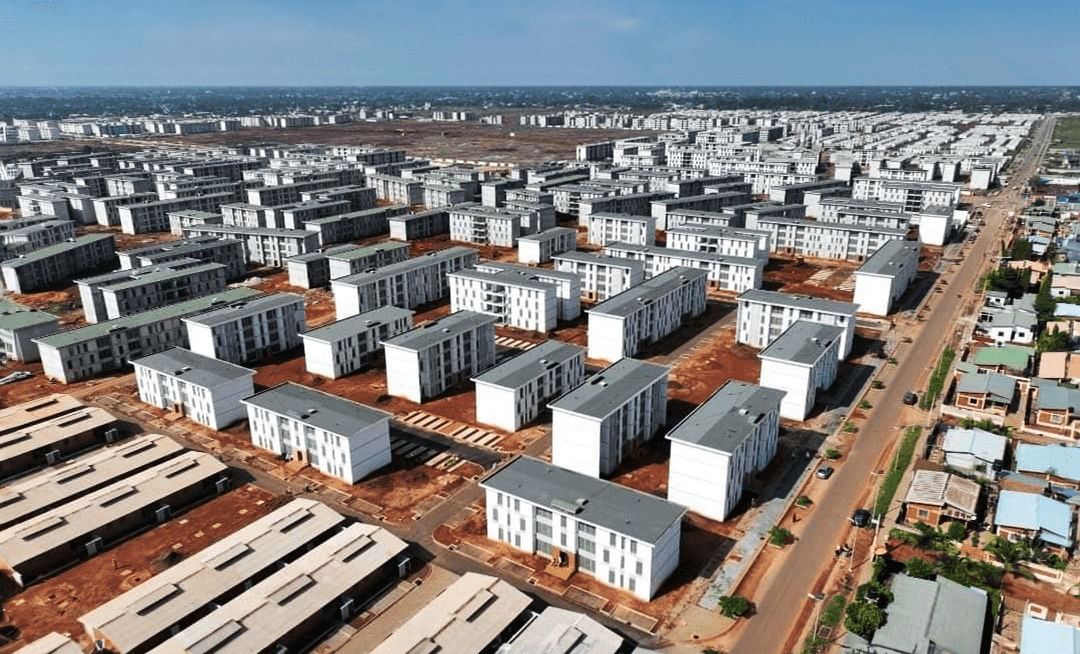
The housing deficit across Africa has reached at least 51 million units, a figure that continues growing as urbanisation accelerates faster than construction capacity. This shortage affects both rural and urban populations. Still, the impact is most acute in rapidly expanding cities where migration patterns concentrate demand in areas with limited existing housing stock and constrained land availability.
The African real estate market is projected to reach approximately $17.64 trillion by 2025, with residential real estate contributing $14.87 trillion of that total. These valuations reflect not just existing property values but the scale of investment required to meet current and future housing needs across diverse market segments.
The Dead Capital Problem
Nigeria exemplifies the broader challenges facing African real estate markets. An estimated $300 billion in property remains trapped as dead capital, unable to serve as collateral for loans or participate effectively in formal economic transactions. This immobilisation of assets reflects fundamental weaknesses in property rights documentation, title verification systems, and the legal frameworks necessary for property to function as productive economic capital.
Urban centres like Lagos are particularly strained, struggling to meet rising demand for affordable housing that young earners can realistically afford. The concentration of economic opportunity in major cities creates housing demand that far exceeds supply in accessible price ranges, pushing lower-income residents into informal settlements or forcing extended commutes from peripheral areas with inadequate infrastructure.
The Funding Gap
Africa faces a $1.4 trillion housing funding gap, representing the investment required to address current deficits and accommodate projected population growth through 2030. This gap exists across the housing spectrum but is most severe in the affordable housing segment, where profit margins are tightest and traditional financing mechanisms work least effectively.
Why Early PropTech Models Fell Short
The initial wave of African PropTech startups launched with considerable optimism but largely failed to achieve sustainable scale or meaningful impact on housing availability and affordability. Understanding these failures provides critical context for evaluating current ventures.
Surface-Level Digitisation Without Economic Impact
Many early ventures focused heavily on property listings, basic rent facilitation, and convenience-driven platforms. While these initiatives improved the user experience for property search and transaction processes, they failed to address the fundamental economics of housing supply, land access, or construction costs.
The limitations of this approach became apparent as the sector matured. Digital listing platforms made it easier to find available properties, but did nothing to increase the supply of affordable units. Rent payment apps streamlined transactions but did not reduce the cost burden on tenants or expand ownership opportunities. These solutions optimized existing market processes without changing the underlying supply and demand imbalances driving the housing crisis.
Market Mismatch and Supply Constraints
Consequently, luxury units continue to dominate urban markets, while demand for compact and affordable homes continues to outpace supply. This mismatch highlights the limitations of surface-level digitisation and underscores the urgent need for structural innovation in the sector.
The economic incentives in African real estate heavily favour high-end development. Land costs, construction expenses, and financing terms make luxury projects more profitable than affordable housing, leading developers to focus capital on market segments least relevant to the majority of housing need. Early PropTech solutions did nothing to alter these incentives or create alternative development models that could profitably serve lower-income segments.
Venture Capital Retrenchment
Venture capital flows have slowed globally, and African PropTech has struggled even more, capturing less than one per cent of total VC inflows in recent years. This funding drought reflected both global macroeconomic pressures and investor recognition that early PropTech business models had failed to demonstrate sustainable unit economics or paths to profitability.
Several early startups that aimed to modernise real estate through digital platforms have either shut down, scaled back, or faded from the ecosystem. These failures created a period of skepticism about PropTech's viability in African markets, with investors questioning whether technology could meaningfully impact a sector dominated by physical infrastructure constraints, regulatory complexity, and capital intensity.
A New Chapter in African PropTech
A new phase is emerging where PropTech solutions target cost reduction, increased supply, and expanded ownership opportunities. This shift from convenience to systemic impact represents a fundamental reorientation of how technology engages with real estate challenges.
Crowdfunded Real Estate Platforms
Crowdfunding models are democratizing access to real estate investment while mobilising private capital to address housing deficits. These platforms allow individuals to invest smaller amounts in affordable and sustainable housing projects, reducing the capital barriers that previously limited real estate investment to wealthy individuals and institutional players.
The crowdfunding approach addresses multiple challenges simultaneously. It creates new funding sources for developers focused on affordable housing, provides investment opportunities for middle-class savers seeking returns beyond traditional banking products, and aligns investor incentives with social impact by channelling capital toward housing segments with the greatest need.
Technology-Driven Construction Innovation
Technology-driven construction methods like 3D printing and robotics are gaining traction as viable approaches to reducing construction costs and timelines. These innovations directly attack one of the core constraints on affordable housing supply by making it economically feasible to build at price points previously considered unprofitable.
3D printing technology enables the rapid construction of standardized housing units with reduced labor requirements and material waste. Robotics applications in construction improve precision, reduce errors, and enable building in challenging locations where traditional construction methods face logistical constraints. Together, these technologies are beginning to demonstrate that construction cost curves can be bent downward through genuine innovation rather than merely incremental efficiency improvements.
Rent-to-Own Structures
Rent-to-own structures tailored to younger populations are gaining traction as alternatives to traditional homeownership pathways that require substantial upfront capital. These models allow renters to build equity over time while occupying properties, creating a bridge between pure rental arrangements and outright purchase that matches the financial realities of young urban professionals.
The rent-to-own approach addresses a critical market failure. Many young earners have stable incomes sufficient to service mortgage payments, but lack the savings for down payments required by traditional lenders. Rent-to-own structures that allow a portion of monthly rent to accumulate as equity provide a pathway to ownership that would otherwise remain inaccessible, expanding the market of potential homeowners while providing developers with committed long-term tenants.
The Investment Resurgence
After years of underperformance, African PropTech is entering an unexpectedly vibrant investment period. This renewed capital flow reflects investor recognition that the new generation of PropTech solutions is targeting more fundamental challenges than their predecessors.
Early-stage Funding Momentum
Over $70 million in early-stage funding was recorded in the first half of 2025 alone, driven by interest in platforms that digitise property search, verification, financing, and transactions. This funding level represents a significant acceleration from the capital drought of previous years and suggests growing investor confidence that viable business models are emerging.
The capital is flowing to ventures demonstrating clear value propositions beyond convenience enhancement. Investors are backing solutions that tackle structural constraints in supply, financing, verification, and ownership rather than merely optimising existing processes. This shift in investment thesis reflects lessons learned from early PropTech failures and recognition that sustainable businesses must address fundamental market inefficiencies.
Case Study: ULE Homes
Companies like ULE Homes illustrate this renewed investor confidence, signalling a willingness to back solutions that tackle structural constraints. While specific details of ULE Homes' model and funding are not provided in available data, the company's prominence in investor discussions indicates it represents the type of structural innovation attracting capital in the current environment.
The investment resurgence suggests the market is ready for ideas that extend beyond basic listings and produce tangible improvements in affordability, transparency, and access. Investors are no longer satisfied with platforms that merely digitise existing processes. They are seeking ventures that fundamentally alter the economics of housing development, financing, or ownership in ways that expand market access to underserved segments.
Mega Projects and Global Capital Integration
African real estate is no longer shaped solely by startups. Sovereign wealth funds and large-scale international capital are increasingly influencing development patterns, creating a more complex and globalized sector landscape.
Large-Scale Development Models
Egypt's coastal megaproject developed in partnership with Qatar exemplifies the mixed-use urban developments structured around layered equity, long-term ownership plans, and integrated residential components. These projects operate at scales far beyond startup capabilities, involving billions in capital investment, complex financing structures, and multi-year development timelines.
In Lagos, high-profile global partnerships continue to drive investment inflows, bringing international development expertise, capital, and standards to Africa's largest city. These partnerships often combine local knowledge and land access with international financing and project management capabilities, creating hybrid models that leverage the strengths of different institutional players.
Implications for Startups
For innovators and emerging startups, these mega developments offer templates for success while also defining competitive dynamics. African real estate is becoming a globalised sector, and future ventures must align with tourism, destination development, modern housing, or provide enabling services within complex capital ecosystems.
Startups are unlikely to compete directly with sovereign wealth funds and international developers on large-scale projects. Instead, opportunities exist in providing specialized services, technology platforms, or niche solutions that serve the broader ecosystem created by major developments. This might include property management technology, tenant services, maintenance coordination, or data analytics that help large developers optimise operations and tenant experiences.
Data Infrastructure as Competitive Advantage
Nigeria's persistent data gaps represent both a weakness and an opportunity for PropTech innovation. The lack of reliable market intelligence creates inefficiencies throughout the real estate value chain while simultaneously creating substantial value capture potential for ventures that can solve information asymmetry problems.
The Data Quality Crisis
Industry observers note that unreliable listings, weak title documentation, inconsistent valuation benchmarks, and poor market intelligence undermine trust and limit investment readiness. Over 60% of online property listings contain inaccurate information, affecting lenders, investors, and end-users alike.
This data quality crisis imposes real costs on market participants. Buyers waste time viewing properties that do not match advertised specifications. Lenders struggle to assess collateral value accurately, leading to conservative lending practices that restrict credit availability. Investors lack the market intelligence necessary to identify opportunities or price assets correctly, reducing capital flows to the sector.
The Value of Verified Data
Startups capable of verifying listings, generating credible datasets, improving land documentation systems, or offering decision-grade analytics enjoy a significant competitive advantage. High-quality data infrastructure is no longer optional but has become one of the continent's most valuable frontiers for PropTech innovation.
The business models enabled by verified data are substantial. Subscription services providing market intelligence to investors, developers, and lenders can command premium pricing. Verification services that certify listing accuracy create trust in marketplaces and enable transaction facilitation. Title verification and land documentation systems that reduce ownership disputes unlock previously untradeable properties and enable their use as collateral.
Regulatory Evolution and Urban Reform
Government actions are increasingly reshaping the sector's landscape, creating both new requirements and new opportunities for PropTech ventures capable of adapting to evolving policy frameworks.
Nigeria's Policy Initiatives
Nigeria is moving toward regulated rent increases and launching capital-market-driven housing funds approaching one trillion naira. These initiatives reflect government recognition that housing affordability requires policy intervention beyond market mechanisms alone.
Regulated rent increases protect tenants from exploitative pricing while providing landlords with predictable income streams that can support financing against rental properties. Capital-market-driven housing funds create new financing vehicles that can channel institutional investment toward residential development at scales previously unavailable, potentially unlocking substantial new supply.
Lagos Urban Digitisation
Lagos is digitising its land registry, advancing urban renewal programs, and supporting adaptive reuse projects such as Nahous, which converts old structures into modern creative or mixed-use spaces. These interventions are altering the economics of development, leasing, mortgages, and redevelopment.
Digital land registries reduce transaction costs, accelerate title transfers, and create verifiable ownership records that can serve as collateral for financing. Urban renewal programs create opportunities for developers willing to work with existing structures rather than pursuing greenfield projects. Adaptive reuse initiatives demonstrate that heritage buildings can be economically viable when reimagined for contemporary uses.
Emerging Opportunities
These regulatory and policy developments create opportunities for startups in rent-to-own platforms, mortgage tech, title tech, REIT-linked products, construction-tech, data verification, and urban renewal services. Each policy initiative creates specific pain points or process requirements that technology solutions can address, translating government action into commercial opportunities for PropTech ventures.
Leading PropTech Startups: Case Studies
The current generation of African PropTech startups demonstrates the sector's evolution toward solutions addressing fundamental housing challenges. These companies represent diverse approaches to supply, affordability, transparency, and access.
Mubawab: Digital Marketplace Leadership in Morocco
Founded in 2010 and based in Morocco, Mubawab offers an extensive online property marketplace consolidating verified listings, virtual tours, and analytics. The company has raised $17,850,000 in funding, making it one of the most capitalized PropTech ventures in Africa.
Mubawab has enhanced market transparency and accessibility, demonstrating how digital-first platforms can reshape property search and investment when they prioritize listing verification and comprehensive market data. The platform's longevity and funding success indicate it has achieved sustainable business model economics that eluded many earlier PropTech ventures.
The company's approach combines convenience features with data quality commitments that address fundamental market inefficiencies. Virtual tours reduce the time and cost associated with property viewing, while verified listings and analytics provide decision-support tools that improve market efficiency. This combination of user experience and market infrastructure improvement represents the evolution beyond pure convenience platforms.
Jumba: Construction Supply Chain Innovation in Kenya
Founded in 2022 in Kenya, Jumba addresses inefficiencies in construction supply chains by enabling developers to source materials, secure financing, and manage procurement digitally. With $5,500,000 in seed funding, the company demonstrates strong early-stage investor confidence in its model.
Jumba reduces delays and costs that directly impact affordability and scalability in rapidly growing urban centres. Construction supply chain inefficiencies impose substantial costs through delayed projects, material waste, price opacity, and working capital tied up in inventory. By digitizing procurement and integrating financing, Jumba attacks multiple inefficiency sources simultaneously.
The company's model is particularly relevant in African markets where construction supply chains remain highly fragmented, with developers sourcing from multiple small suppliers lacking digital systems or financing relationships. Jumba's platform consolidates supply, provides price transparency, and embeds financing at the point of procurement, creating value for both developers and suppliers.
14Trees: 3D Printing Technology in Malawi
Founded in 2020 in Malawi, 14Trees pioneers 3D-printed affordable housing and schools through partnerships with Lafarge Holcim, British International Investment, and Amazon's Climate Pledge Fund. The company represents the convergence of construction technology innovation, impact investment, and corporate sustainability commitments.
By reducing construction time and costs, 14Trees tackles Africa's $1.4 trillion housing funding gap, providing sustainable and scalable solutions for urgent population demands. 3D printing technology enables rapid construction of standardised units with reduced labour requirements, addressing both cost and speed constraints that limit affordable housing supply.
The partnership structure supporting 14Trees is noteworthy. Lafarge Holcim provides materials expertise and supply chain integration. British International Investment brings development finance and project structuring capabilities. Amazon's Climate Pledge Fund contributes sustainability-focused capital and potentially procurement commitments. This multi-stakeholder model demonstrates how PropTech ventures can access diverse capital sources by aligning with corporate, development, and impact investment priorities.
Seso Global: Blockchain Land Verification in Nigeria
Founded in 2017 in Nigeria, Seso Global leverages blockchain technology to secure land transactions and verify property ownership, addressing the issue of inaccurate listings affecting over 60% of online properties. With $600,000 in seed funding, the company tackles one of African real estate's most fundamental challenges through distributed ledger technology.
Seso Global increases market trust and unlocks dead capital by modernising property rights documentation. Blockchain's immutability and transparency characteristics make it well-suited to land registry applications where ownership disputes and fraudulent documentation create severe market inefficiencies.
The company's focus on Nigeria is strategic, given the country's $300 billion in dead capital and weak land documentation systems. By creating verifiable ownership records, Seso Global enables properties to serve as collateral for financing, participate in formal transactions, and transfer ownership with reduced legal risk. These capabilities directly address the dead capital problem that constrains both individual wealth and broader economic development.
CoFundie: Crowdfunding Platform in Ghana
Founded in 2019 in Ghana, CoFundie uses crowdfunding to allow individuals to invest in affordable and sustainable housing projects. Raising $100,000 in seed funding, the company democratizes investment and mobilizes private capital to reduce Africa's 51 million-unit housing deficit.
CoFundie enhances ownership opportunities for younger populations by reducing the capital barriers to real estate investment. Rather than requiring substantial funds to purchase entire properties, investors can participate in projects with smaller amounts, building diversified real estate portfolios over time.
The platform also addresses the developer funding challenge by creating new capital sources for affordable housing projects that struggle to attract traditional financing. By matching retail investors seeking real estate returns with developers needing capital for affordable projects, CoFundie creates a market where one previously did not exist efficiently.
Strategic Outlook: The PropTech Transformation Ahead
African PropTech is entering a transformative era characterized by solutions addressing systemic issues in affordability, supply, and ownership rather than merely optimizing existing market processes.
From Convenience to Structural Impact
While early ventures focused on convenience and surface-level digitisation, the new generation of startups is tackling fundamental constraints. With renewed investor interest evidenced by over $70 million in early-stage funding in the first half of 2025, capital is flowing to ventures demonstrating credible approaches to cost reduction, supply expansion, and ownership democratisation.
The distinction between convenience and structural impact defines the current investment thesis. Investors are evaluating whether ventures merely make existing processes easier or whether they fundamentally alter the economics of housing development, financing, or ownership. This shift in evaluation criteria explains both the funding drought that affected early PropTech and the renewed capital flow supporting current ventures.
Technology Enablers
Integration with global capital, innovative construction methods including 3D printing and robotics, blockchain-enabled land transactions, and crowdfunding for affordable housing represent the technological foundations of the sector's evolution. Each technology addresses specific constraints that have historically limited affordable housing supply or access.
Construction technology reduces the cost and time required to build, directly expanding the economically viable supply of affordable units. Blockchain creates verified ownership records that enable properties to serve as productive capital. Crowdfunding mobilises retail investment capital for projects that traditional institutional investors avoid. Together, these technologies create new economic possibilities that did not exist in previous decades.
Policy and Regulatory Support
Coupled with supportive regulatory frameworks and urban renewal initiatives, these technological developments suggest that PropTech can move from niche convenience to a strategic engine for inclusive, scalable, and sustainable housing solutions across the continent.
Nigeria's capital-market-driven housing funds, approaching one trillion naira, and Lagos's digital land registry represent the type of government action that can accelerate PropTech adoption by creating policy infrastructure that supports new business models. When governments digitise land records, regulate rental markets, or create new financing vehicles, they directly enable PropTech solutions that would face insurmountable barriers in purely market-driven environments.
The Path Forward
By combining technology, capital, and innovation, Africa is positioned to redefine its real estate landscape for decades to come. The 51 million-unit housing deficit and $1.4 trillion funding gap represent enormous challenges, but they also define a massive market opportunity for solutions that can profitably serve affordable housing segments.
The projected $17.64 trillion real estate market by 2025, with $14.87 trillion in residential real estate, provides context for the sector's scale and the potential returns available to ventures that capture even modest market shares. As infrastructure strengthens, regulatory frameworks mature, and construction technologies improve, African PropTech is transitioning from a disappointing first chapter to a potentially transformative second act with fundamentally stronger business models and clearer paths to sustainable impact.
Zellow Observations: Investment Considerations
Market Timing: The over $70 million in early-stage funding during the first half of 2025 signals renewed investor confidence, but capital is flowing selectively to ventures demonstrating structural innovation rather than convenience enhancement. This selectivity creates opportunities for well-positioned startups while maintaining high barriers for undifferentiated platforms.
Business Model Evolution: The shift from listing platforms to construction technology, blockchain verification, and crowdfunding reflects investor recognition that sustainable PropTech business models must address fundamental market inefficiencies rather than optimise existing processes. Ventures combining multiple approaches, such as Jumba's integration of procurement and financing, are particularly well-positioned.
Geographic Focus: Nigeria's $300 billion in dead capital and Lagos's urban renewal initiatives create concentrated opportunities, but the broader market includes diverse conditions across Morocco, Kenya, Ghana, Malawi, and Egypt. Successful regional expansion requires adapting models to local regulatory environments, land tenure systems, and market maturity levels.
Technology Integration: The most compelling ventures combine multiple technology approaches. 14Trees pairs 3D printing with strategic partnerships. Seso Global applies blockchain to Nigeria's specific land documentation challenges. This specificity and integration create defensible competitive positions that generic platforms cannot easily replicate.
Capital Requirements: The $1.4 trillion funding gap indicates that even substantial startup success will address only a fraction of the total need. Realistic ventures should target specific segments, geographies, or price points where they can achieve meaningful scale rather than attempting to solve the entire housing crisis. The most valuable opportunities exist where technology enables profitable service to market segments currently considered economically unviable by traditional developers.
More Insight from Real Life Users


























Insights that Drive Change
Empowering smarter decisions across business, policy, and research