Nov 7, 2025
AgriTech In Africa: How 400+ Startups and $1.56 Billion are Solving Food Security for 1 Billion People
Zellow Analysis: Africa's agriculture sector faces a defining paradox that creates both an urgent crisis and an extraordinary investment opportunity. Over 1 billion people, nearly two-thirds of the continent's population, could not afford a decent meal in 2024, yet agriculture contributes 30-40% of Africa's GDP and employs over half the population. More than 400 active AgriTech businesses have raised over $1.56 billion through 700 investment deals between 2014 and 2024, demonstrating that capital is flowing toward solutions addressing food insecurity affecting 56% of Africans. Companies like Apollo Agriculture in Kenya have boosted maize yields by up to 80% for 300,000 farmers using satellite data and machine learning, while AkoFresh in Ghana reduces post-harvest losses from 40% through solar-powered cold storage with IoT sensors. For investors evaluating African AgriTech opportunities and entrepreneurs building agricultural technology solutions, understanding which business models achieve both commercial viability and measurable food security impact is essential for navigating this $1.56 billion ecosystem addressing one of humanity's most pressing challenges.
What is AgriTech and Why Does Africa Need it Now?
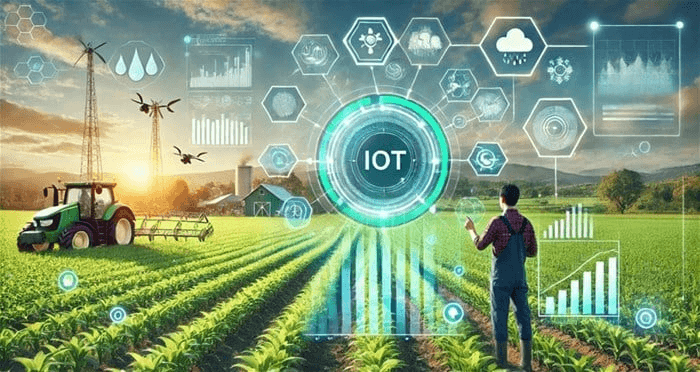
AgriTech, or agricultural technology, encompasses digital tools, artificial intelligence, IoT sensors, and satellite data used to optimise farming practices, increase yields, and improve resource management. In Africa, where traditional agriculture struggles to feed rapidly growing populations, AgriTech isn't supplementing existing systems. It's solving fundamental failures.
The Food Security Crisis Reaching Emergency Levels
Over 1 billion people in Africa could not afford a decent meal in 2024, a sharp increase from 864 million in 2019. That's nearly two-thirds of the continent's population experiencing food access problems that worsened dramatically in just five years.
The statistics reveal crisis severity: Moderate to severe food insecurity affects more than 56% of Africans, according to a joint report by five UN agencies, including the FAO, WHO, and WFP. That's more than double the global average of 28%. Over 20% of Africa's population remains undernourished, and despite progress in other world regions, hunger continues rising across most African subregions.
Why traditional agriculture is failing: Agricultural productivity in many African nations is failing to keep pace with population growth, widening the gap between food supply and demand, according to Máximo Torero, chief economist at the FAO. When your population is projected to reach 1.7 billion by 2030, but farming productivity lags behind demographic growth, the math becomes unsustainable without transformation.
The Environmental and Conflict Drivers Making Everything Worse
Food insecurity isn't just about farming techniques. Both environmental and structural pressures shape persistent hunger across the continent.
Climate shocks are accelerating: Unpredictable rainfall, droughts, and flooding have reduced soil fertility and crop yields across Sub-Saharan Africa. Agriculture must feed growing populations while simultaneously being a significant contributor to greenhouse gas emissions that accelerate the very climate change threatening food production.
Conflict disrupts food systems: Countries such as Sudan, South Sudan, Mali, Mozambique, and Nigeria have been identified by the FAO and WFP as "hotspots of very high concern" where violent conflict disrupts markets and agricultural production. When farmers can't safely access fields or transport crops to markets, productivity collapses regardless of agricultural technology availability.
Economic instability compounds problems: When 56% of your population faces food insecurity and 20% experiences undernourishment, economic productivity suffers, creating vicious cycles where poverty prevents agricultural investment, which perpetuates poverty.
Africa's AgriTech Investment Boom: $1.56 Billion and 400+ Companies
Despite these daunting challenges, or perhaps because of them, Africa's AgriTech ecosystem has shown remarkable resilience and dynamism that's attracting substantial capital.
AgriTech Funding Statistics Africa: Where the Money is Going
More than 400 active AgriTech businesses have collectively raised over $1.56 billion through 700 investment deals between 2014 and 2024. This isn't speculative capital chasing the next consumer app. This is investment flowing toward solutions addressing one of humanity's most fundamental challenges: feeding people.
Geographic concentration patterns: Innovation is concentrated in South Africa, Kenya, Nigeria, and Ghana, where startups are leveraging mobile platforms, AI-driven analytics, IoT sensors, and satellite data to deliver real-time insights, predictive modelling, and efficient resource management for farmers.
This geographic clustering makes sense. These countries offer the combination of agricultural need, digital infrastructure, regulatory environments enabling private sector innovation, and entrepreneurial ecosystems that AgriTech ventures require to achieve product-market fit before expanding to more challenging markets.
Ecosystem support infrastructure: Accelerators such as the AYuTe Africa Challenge, Baobab Network, and GreenTec Capital have been instrumental in nurturing these ventures, creating a thriving landscape of data-powered agricultural innovation beginning to reshape the continent's farming sector.
How AgriTech Solutions Actually Work: Four Proven Business Models
Understanding which AgriTech business models achieve both commercial viability and measurable impact requires examining companies demonstrating success at scale.
Apollo Agriculture Kenya: AI-Powered Microloans Boosting Yields 80%
In Kenya, Apollo Agriculture has developed a full-service digital platform enabling smallholder farmers to move beyond subsistence farming through integrated technology and financing.
How the model works: Apollo employs satellite data and machine learning to assess land productivity and risk, providing fair and efficient microloans. Farmers receive digital vouchers to purchase high-quality seeds and fertiliser locally, then repay after harvest when they actually have income.
Impact at scale: This approach has reached over 300,000 farmers in Kenya and Zambia, boosting maize yields by up to 80% and enhancing household food security. The 80% yield improvement isn't a marginal optimisation. It's a transformation from food insecurity to surplus that can be sold for income.
Why this model works commercially: By using satellite data and AI for credit assessment, Apollo reduces lending risk and underwriting costs compared to traditional agricultural lending requiring physical inspections. Digital vouchers prevent loan diversion to non-agricultural purposes while supporting local input suppliers. Repayment after harvest aligns payment timing with farmer cash flows.
AkoFresh Ghana: Solar Cold Storage Preventing 40% Post-Harvest Losses
Post-harvest losses waste up to 40% of crops annually across Africa. AkoFresh addresses this massive inefficiency through solar-powered cold storage units equipped with IoT sensors.
The technology solution: Solar power enables operation in off-grid areas where 600 million Africans lack electricity access. IoT sensors maintain stable temperatures and provide real-time monitoring. These systems extend the shelf life of fruits and vegetables from two days to more than three weeks.
Impact on farmer economics: By reducing spoilage, AkoFresh stabilises farmer incomes and improves market access for perishable crops such as tomatoes and mangoes. Farmers can wait for better prices rather than accepting distress sales when entire harvests must be sold within 48 hours before spoiling.
Geographic targeting: AkoFresh has provided practical solutions in power-deprived regions like Bono East in Ghana, demonstrating that AgriTech solutions must be designed for African infrastructure realities rather than assuming reliable electricity access.
AgriPredict Zambia: Satellite Early Warning Reducing Crop Losses 30%
AgriPredict empowers farmers to prevent crises before they occur by combining satellite data with smartphone image recognition to detect crop diseases, forecast pest infestations, and anticipate weather events.
Real-time actionable intelligence: Farmers receive alerts and tailored advice in local languages through mobile phones. During the 2023 fall armyworm outbreak, AgriPredict users reduced crop losses by over 30% compared to non-users by receiving early warnings enabling timely interventions.
Beyond individual farmers: The platform's data also informs national early warning systems, guides regional food security policies, and reduces environmental harm from excessive chemical use by enabling targeted pesticide application only where actually needed.
Dual revenue model: AgriPredict generates revenue from both farmer subscriptions and government/NGO contracts for early warning system data, creating diversified income streams less dependent on individual farmer payment capacity.
Thrive Agric Nigeria: Crowdfunding Platform Mobilising $120 Million
In Nigeria, Thrive Agric addresses the chronic funding gap limiting farm productivity by connecting farmers with investors and agribusiness buyers through a crowd-farming, data-driven marketplace.
How crowdfunding works for agriculture: The platform combines remote sensing and analytics to monitor farm performance, allocate resources efficiently, and enable transparent reporting of returns to investors. This transparency reduces perceived risk of agricultural investments traditionally avoided by formal finance.
Scale achieved: By 2025, Thrive Agric had empowered more than 500,000 farmers and facilitated $120 million in funding, reinforcing local food supply chains and supporting national resilience programs in partnership with the Central Bank of Nigeria and international donors.
The investment thesis: For investors seeking returns plus food security impact, Thrive Agric's model demonstrates that agricultural investment can generate commercial returns when backed by data reducing information asymmetry and technology enabling performance monitoring.
Zellow Strategic Framework: The Four-Layer AgriTech Value Stack
Understanding where value gets created and captured in African AgriTech requires recognizing distinct but interdependent layers where different business models operate.
Layer One: Input Optimization (Seeds, Fertilizer, Credit)
Companies like Apollo Agriculture operate here, using data to improve input quality, timing, and financing. Value creation comes from yield improvements of 50-80% when farmers access quality inputs at the right time, with financing matching their cash flow realities.
Investment characteristics: Moderate capital requirements, clear ROI measurable in yield improvements, and established business models proven in other emerging markets. Primary risk is farmer repayment, mitigated through satellite monitoring and weather insurance integration.
Layer Two: Farm Operations Intelligence (Monitoring, Prediction, Advice)
AgriPredict exemplifies this layer, providing real-time data enabling better farming decisions. Value creation comes from reducing losses (30% in the armyworm example) and optimizing resource use, particularly expensive inputs like pesticides and water.
Investment characteristics: Lower capital requirements than input businesses, scalable through mobile technology, and potential for government contracts providing revenue stability. Primary challenge is willingness-to-pay among smallholder farmers, requiring freemium or subsidy-supported models initially.
Layer Three: Post-Harvest Value Preservation (Storage, Processing, Logistics)
AkoFresh operates here, preventing the 40% post-harvest losses that make African agriculture economically unviable regardless of yield improvements. Value creation comes from enabling farmers to capture the full value of their production and access better markets.
Investment characteristics: Higher capital requirements for physical infrastructure (cold storage units, processing equipment), but revenue from storage fees provides predictable income. Solar power enables operation in off-grid areas where need is greatest, but infrastructure is worst.
Layer Four: Market Access And Finance (Crowdfunding, Marketplaces, Trade)
Thrive Agric exemplifies marketplace models connecting farmers with financing and buyers. Value creation comes from reducing transaction costs and information asymmetry that prevent efficient capital allocation to agriculture.
Investment characteristics: Platform businesses with potential for high margins once achieving liquidity, but require substantial capital to reach critical mass. Success depends on solving the chicken-and-egg problem of attracting both farmers and investors/buyers simultaneously.
Zellow Observations: Why Some AgriTech Models Work, and Others Fail
The Infrastructure Reality Check: AgriTech solutions must work with African infrastructure realities, not against them. AkoFresh's solar-powered cold storage succeeds precisely because it doesn't assume reliable electricity. Solutions requiring consistent internet, electricity, or logistics infrastructure fail in the rural African contexts where impact potential is greatest.
The Payment Capacity Problem: Smallholder farmers living near subsistence cannot pay subscription fees for advisory services, regardless of the value created. Successful models either monetise other value chain participants (Thrive Agric charging investors, AgriPredict selling data to governments) or embed costs in measurable yield improvements that generate repayment capacity (Apollo Agriculture's post-harvest repayment).
The Scale Imperative: Apollo Agriculture's 300,000 farmers, Thrive Agric's 500,000 farmers, and the overall pattern suggest that AgriTech ventures must achieve hundreds of thousands of users to generate returns justifying the capital requirements and market development costs. This scale imperative favours models that can grow through mobile technology and agent networks rather than requiring physical presence in thousands of villages.
The Data Moat Question: The 700 investment deals suggest competition is intensifying. Successful AgriTech companies are building defensibility through accumulated agricultural data, farmer relationships, and operational networks rather than through technology that can be replicated. Apollo's satellite data on 300,000 farms creates information advantages competitors cannot easily duplicate.
The Technology Enabling Agricultural Transformation
Understanding which technologies actually solve African agricultural challenges versus those that sound impressive but fail in practice is critical for investment decisions.
Satellite data and remote sensing enable monitoring farm conditions without expensive field visits, reducing operational costs while improving credit assessment and performance tracking accuracy.
AI and machine learning process satellite imagery, weather data, and historical yields to provide predictive insights about optimal planting times, pest risks, and expected harvest volumes.
IoT sensors in cold storage units, irrigation systems, and soil monitoring provide real-time data enabling responsive management and documentation of performance for investors.
Mobile platforms deliver insights, credit, and market access to farmers through feature phones widely owned even in rural areas, avoiding smartphone dependency, limiting reach.
Blockchain technology ensures traceability in export markets, guarantees fair remuneration for farmers, and increases transparency and confidence across value chains, particularly for premium markets demanding verified sustainable practices.
Africa's Strategic Advantages for AgriTech Leadership
Africa's comparative advantages position the continent not just to feed itself but to become a significant, technologically advanced player in global food systems.
Large, youthful population provides both massive market for food and a growing workforce for technology-enabled agriculture as youth-led innovation and data-driven entrepreneurship increasingly shape the sector's future.
Widespread mobile connectivity enables leapfrogging past desktop computing and fixed broadband, directly to mobile-first agricultural services reaching even remote farming communities.
Abundant fertile land means productivity improvements through technology can generate dramatic food production increases without requiring new land conversion.
Urgent need driving innovation: The 1 billion people facing food insecurity creates both a moral imperative and a commercial opportunity that focuses entrepreneurship and attracts capital toward solutions achieving both impact and returns.
The Path Forward: From $1.56 Billion to Transformational Scale
Over the next decade, Africa's evolving AgriTech ecosystem promises not only to feed its growing population projected to reach 1.7 billion by 2030 but also to demonstrate that innovation, sustainability, and entrepreneurship can transform longstanding agricultural challenges into opportunities for growth and resilience.
The investment opportunity is clear: 400+ companies raising $1.56 billion through 700 deals demonstrate capital finding opportunities, but the sector remains undercapitalised relative to need. Companies demonstrating Apollo Agriculture's 80% yield improvements or AgriPredict's 30% loss reductions at scale will attract follow-on funding, enabling geographic expansion and service diversification.
The impact potential is extraordinary: When 56% of Africans face food insecurity and agricultural productivity lags population growth, even marginal AgriTech adoption improvements generate massive human impact. Solutions reaching millions of smallholder farmers don't just generate financial returns. They prevent famine and enable economic development.
The technology foundation exists: Satellite data, AI, IoT sensors, mobile platforms, and blockchain have all proven they work in African agricultural contexts when deployed thoughtfully. The challenge isn't technology availability. It's achieving scale, building sustainable business models, and ensuring solutions reach smallholder farmers most needing productivity improvements.
For investors, entrepreneurs, and policymakers, African AgriTech represents that rare convergence of enormous need, proven solutions, established business models, and capital efficiency that defines transformational investment opportunities. The 1 billion people facing food insecurity aren't just a humanitarian crisis. They're a market waiting for solutions that work.
More Insight from Real Life Users


















Insights that Drive Change
Empowering smarter decisions across business, policy, and research